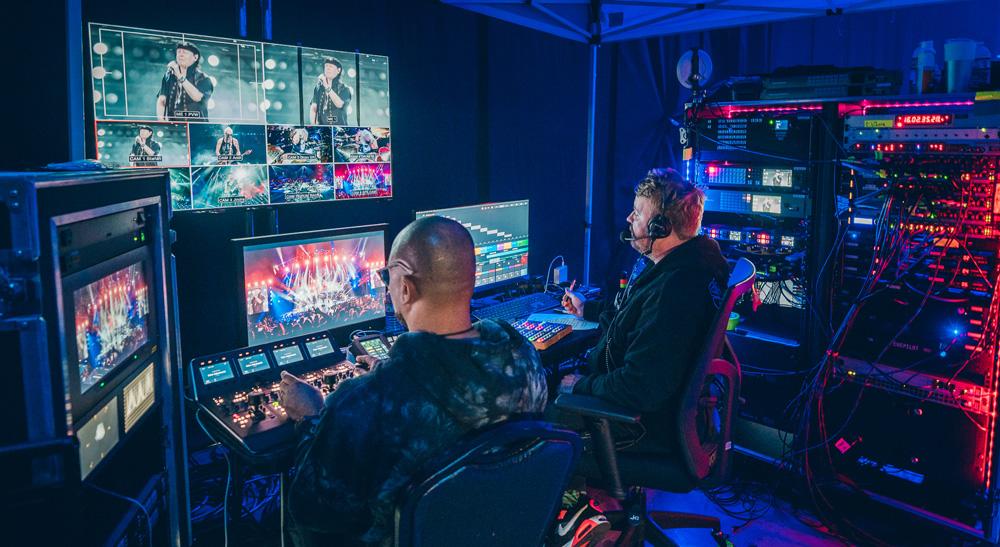
For a long time, our industry used complexity as a shorthand for professionalism. If a media server had more layers, more menus, and a steeper learning curve, it was assumed to be more capable — and the operators who could tame it wore that difficulty as a badge of expertise. That assumption is quietly breaking down, and the productions being delivered today are the reason why.
Walk into almost any modern show and the environment is already complex before the media server is even switched on. Larger LED canvases, projection mapping, interactive spaces, multiple breakout rooms, and hybrid control setups all stack real-world variables on top of one another. The room is complicated enough. The question worth asking is whether the playback platform is reducing that pressure or adding to it.
Complexity has quietly moved from feature to liability
There is a meaningful difference between a system that is powerful and a system that is punishing. Power is the ability to drive many outputs, hold reliable playback, and adapt to custom resolutions and mixed content. Punishment is everything an operator has to memorise, work around, or pray about to unlock that power under pressure. When the room is full and the client is watching, the second kind of system stops being impressive and starts being a risk.
The next leap in media servers will not be defined only by how many pixels they can push. It will be defined by how confidently operators can manage those pixels when the room is full, the client is watching, and there is no time to troubleshoot.
This is the paradox: the most advanced thing a media platform can now do is make sophisticated work feel calm. That does not mean stripping capability away. It means designing the relationship between content, canvases, and outputs so that an operator can reason about the whole show in their head; without a mental map, a cheat sheet, or a specialist on standby.
Designing for the operator, not the spec sheet
When power and simplicity are treated as opposites, buyers are forced into a bad trade: accept operational risk to get performance or accept performance limits to get calm. The more interesting design goal is to refuse that trade; to deliver high output density and dependable, consistent show delivery through a workflow that a competent operator can run with minimal training. Confidence, it turns out, is a feature. It is just one that never appears on a datasheet.
None of this is an argument against ambition. Shows are getting bigger and video is moving to the centre of the experience. It is an argument about where the next round of engineering effort should go: not into more surface area, but into removing the friction between an operator’s intent and what the audience sees.
The market is changing too